
|
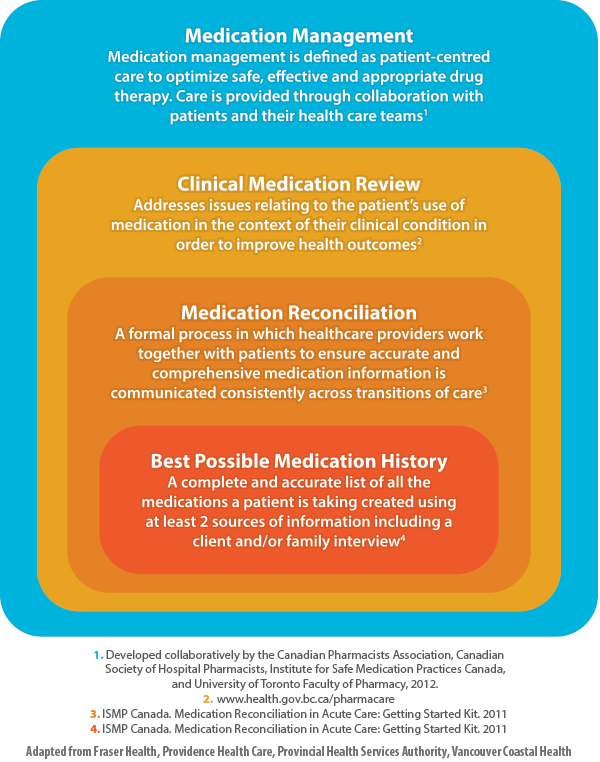
Medication reconciliation is a formal process in which healthcare providers work together with patients, families and care providers to ensure accurate and comprehensive medication information is communicated consistently across transitions of care.
Medication reconciliation requires a systematic and comprehensive review of all the medications a patient is taking (known as a BPMH) to ensure that medications being added, changed or discontinued are carefully evaluated. It is a component of medication management and will inform and enable prescribers to make the most appropriate prescribing decisions for the patient.
"[Medication Reconciliation] is definitely the right thing to do. We have certainly caught errors that could have caused harm to patients, which helps staff and physicians better understand the importance of MedRec."
Winnipeg Regional Health Authority, MB
A Best Possible Medication History (BPMH) is a history created using 1) a systematic process of interviewing the patient/family; and 2) a review of at least one other reliable source of information to obtain and verify all of a patient's medication use (prescribed and non-prescribed). Complete documentation includes drug name, dosage, route and frequency. The BPMH is more comprehensive than a routine primary medication history which is often a quick preliminary medication history which may not include multiple sources of information. The BPMH is a 'snapshot' of the patient's actual medication use, which may be different from what is contained in their records. This is why the patient involvement is vital.
ISMP Canada supports Medication Reconciliation provincially, nationally and internationally ISMP Canada created Getting Started Kits for Medication Reconciliation in Acute Care, Long Term Care and Home Care for the Canadian Safer Healthcare Now! campaign. Best Possible Medication History (BPMH) training is available. Read More … Knowledge is the best medicine - Tools to Help Patients Keep Track of Their Medications - MyMedRec iPhone app and website Experienced a MedRec failure? Report the medication incident to ISMP Canada. |
||
|
Ontario
Find out more … |
Medication Reconciliation in Canada: Raising the Bar (English) (Français) A Snapshot of Medication Reconciliation in Canada (English) Medication Communication Failures Impact EVERYONE! Poster and consensus statement from Canadian Healthcare leaders (English) (Français) National Survey: Identifying Practice Leaders for Medication Reconciliation in Canada (English) (Français) ISMP Canada is co-leading, with CPSI, the National Medication Reconciliation Strategy and is pleased to support the Canada Health Infoway ImagineNation Outcomes Challenge. National Summit: Optimizing Medication Safety at Care Transitions (English) (Français) Find out more … |
ISMP Canada is the Protocol Lead for the World Health Organization (WHO) High 5s Medication Reconciliation Program: 'Assuring Medication Accuracy at Transitions in Care'. High 5s Project Overview Fact Sheet (English) (Français) Standardized Operating Protocols (SOPs) Find out more … |



|
Provincial
Ontario Primary Care Medication Reconciliation Guide ISMP Canada in partnership with Health Quality Ontario developed a guide to assist practitioners in primary care implement medication reconciliation. The guide provides implementation strategies, approaches for closing the gaps between various primary care providers, and methods for measuring performance. Ontario Primary Care Medication Reconciliation Guide Downloads:
Linking MedsCheck to MedRec - June 2009 With the support of the Ontario Ministry of Health and Long-Term Care (MOHLTC) and the Ontario Pharmacy Council, the Institute for Safe Medication Practices Canada (ISMP Canada) developed and delivered a pilot program to link the community-based MedsCheck program with medication reconciliation programs in hospitals. The goal of this collaborative initiative between hospitals and community pharmacists was to obtain the Best Possible Medication History (BPMH) for patients preparing to be admitted to hospital for surgery. Linking MedsCheck to MedRec Report (PDF) Optimizing Communication about Medications at Transitions of Care in Ontario - September, 2010 In the spring of 2010, ISMP Canada, in collaboration with the Canadian Society of Hospital Pharmacists Ontario Branch, hosted two invitational roundtable sessions. The overall goal of the sessions was to discuss opportunities and create recommendations to fully understand and utilize the drivers and resources that exist in Ontario to facilitate communication of medication information at transitions of care. Optimizing Communication about Medications at Transitions of Care in Ontario Report (PDF) Medication reconciliation at all interfaces of care - Pilot Project 2011/2012 Will provide a model for other institutions to adapt.
Medication Reconciliation at discharge - Pilot Project 2011/2012 Will provide a model for other institutions to adapt.
Potential Medication Reconciliation Indicators for Public Reporting - 2012 Hospital to Home - Facilitating Medication Safety at Transitions - 2015 A Toolkit and Checklist for Healthcare Providers Hospital discharge is a critical interface when patients are at high risk of fragmented care, adverse drug events, and medication errors as they transition out of the hospital to their home environment. Ensuring safe medication transitions is complex and requires an interdisciplinary team effort. The goal of using a medication-focused transition checklist is to increase patient safety by reducing medication errors and incidents that occur when a patient transitions from hospital to home. Developed with support from the Ontario Ministry of Health and Long-Term Care. Tools for Medication Reconciliation:
|


|
National
NATIONAL MEDICATION RECONCILIATION STRATEGY Co-lead by ISMP Canada and CPSI.
Paper to Electronic MedRec Implementation Toolkit 2nd Edition This toolkit was prepared by researchers from the University of Victoria, in collaboration with AE Informatics Inc., ISMP Canada and CPSI thanks to funding from Canada Health Infoway. It explores current electronic MedRec (eMedRec) practices in Canada and provides guidance for organizations to migrate from a paper-based system to an electronic system for MedRec.
Tell us what you think about the toolkit. Send your comments and feedback to medrec@ismp-canada.org Medication Reconciliation in Canada: Raising the Bar Communicating effectively about medications is a critical component of delivering safe care. Without it, patients are at risk. By identifying and resolving medication discrepancies, the likelihood of adverse events occurring within health care organizations across the continuum of care will be reduced. In this report, four national health care organizations - Accreditation Canada, the Canadian Institute for Health Information, the Canadian Patient Safety Institute, and the Institute for Safe Medication Practices Canada - share information about medication reconciliation in Canada, thus painting a comprehensive picture of the situation. A Snapshot of Medication Reconciliation in Canada Communicating effectively about medications is a critical component of delivering safe care across all sectors of the Canadian health care system. Without it, patients are at risk. This communication must involve clinicians working with patients, families, and other health care providers to collect and share comprehensive medication information.
A Year in Review This 2011 year end review reports on the progress of the National Medication Reconciliation (MedRec) Strategy. The accomplishments to date are significant, but we clearly acknowledge there is much work left to do. Improving communications about medications is a critical aspect of providing safer care and involves healthcare leaders, practitioners, and the public we serve. Your continued involvement will help ensure MedRec is a standard practice across the Canadian healthcare system. Medication Communication Failures Impact EVERYONE! Poster Medication Safety: We all have a role to play. The poster defines the impact of the Patient and Family, Healthcare System and Society in the communication of medications and includes an inter-professional joint statement, endorsed by 11 Canadian Healthcare organizations. This statement reflects the unique inter-professional ownership of this complex process, positioning Canada as a leader in this collaborative approach to professional engagement in support of medication reconciliation. Identifying Practice Leaders for Medication Reconciliation in Canada To facilitate understanding of the current landscape of medication reconciliation (MedRec) in Canada a survey of healthcare organizations was conducted between July and November of 2011. The purpose of the survey was to identify challenges and success factors in implementation of this key aspect of patient safety and to collect an inventory of tools and resources that contributed to this success. National Summit: Optimizing Medication Safety at Care Transitions - February 10, 2011 On February 10, 2011 healthcare leaders from across the country gathered in Toronto to carve out strategies and identify solutions/ best practices for improving communication to reduce preventable medication errors during transitions of care, one of the country's biggest patient safety issues. ISMP Canada and CPSI will together create a national steering committee to ensure the recommendations identified at the summit are implemented.
Ontario Critical Incident Learning Bulletins: ISMP Canada is the Intervention Lead for medication reconciliation in the successful Safer Healthcare Now! network. ISMP Canada supports Canadian teams in acute care, long term care, and home care implement medication reconciliation and optimize communication about medications across transitions of care. Getting Started Kits for Medication Reconciliation have been created for Acute Care, Long Term Care and Home Care. These kits provide guidance to implement medication reconciliation. The Community of Practice for Medication Reconciliation facilitates sharing and learning among practitioners across Canada. Activities include posting the latest articles, website links and tools contributed by individuals and teams participating in SHN. If you wish to sign up for SHN or participate in the Community of Practice for Medication Reconciliation, please go to the Safer Healthcare Now! website at www.saferhealthcarenow.ca.
Medication Reconciliation in Acute Care Hundreds of Canadian teams are implementing medication reconciliation in acute care. Although this began as a response to Accreditation Canada Required Organizational Practices (ROP's) teams that are successful would never return to previous practices.
Success Stories:
Medication Reconciliation in Long-Term Care ISMP Canada identifies the proactive medication reconciliation model as being the most desirable in Long-Term Care.
Success Stories: Medication Reconciliation in Home Care The Home Care Getting Started Kit is the result of a partnership between VON Canada, CPSI and ISMP Canada. A pilot project including 20 teams from across Canada identified that more than 40% of clients had one or more discrepancies among various sources of information.
Videos: Additional Posters and Guides:
|
|||||||||


|
International - WHO High 5s Medication Reconciliation Program: Assuring Medication Accuracy at Transitions in Care
ISMP Canada is honoured to be the Protocol Lead for the World Health Organization (WHO) High 5s Medication Reconciliation Program: 'Assuring Medication Accuracy at Transitions in Care'. What is the High 5s Project?
The High 5s Project was launched by the World Health Organization (WHO) in 2006 to address continuing major concerns about patient safety around the world. The High 5s name derives from the Project's original intent to significantly reduce the frequency of 5 challenging patient safety problems in 5 countries over 5 years. The Mission of the High 5s Project is to facilitate implementation and evaluation of standardized patient safety solutions within a global learning community to achieve measurable, significant and sustainable reductions in challenging patient safety problems. The High 5s Project is a patient safety collaboration among a group of countries and the WHO Collaborating Centre for Patient Safety in support of the WHO Patient Safety Programme. High 5s Project Overview Fact Sheet (English) (Français) Scope of the High 5s The major components of the High 5s Project include the development and implementation of problem-specific Standardized Operating Protocols (SOPs); creation of a comprehensive Impact Evaluation Strategy; collection of data, reporting and analysis; and the establishment of an electronic collaborative learning community. The Medication Reconciliation Protocol was developed by the Institute for Safe Medication Practices in Canada (ISMP Canada) and the Canadian Patient Safety Institute (CPSI). The High 5s Project is designed to generate learning that will permit the continuous refinement and improvement of the SOPs, as well as assessment of the feasibility and success of implementing standardized approaches to specific patient safety problems across multiple countries and cultures. Achievement of the Project goals is expected to provide valuable lessons and new knowledge to support the advancement of patient safety around the world. |

National MedRec Webinars Previous Webinars Rebranding MedRec - How organizations are using '5 Questions to Ask about your Medications' Kim Streitenberger, RN, Project Leader, ISMP Canada, Alice Watt, RPh, BScPhm, Medication Safety Specialist, ISMP Canada, Jiten Jani, RPh ACPR, PMP, Pharmacy Manager, St-Joseph's Health Centre Toronto, Carla Beaton, R.Ph., B.Sc.Phm., CGP, FASCP, Vice President, Clinical Innovations and Quality Improvement, HQO Ideas Alumni, Maryann Murray, Patients for Patients Safety Canada, Andrea Kent, BScPharm, PharmD, Manager, Pharmacy Services, Colchester East Hants Health Centre, Nova Scotia Mike Cass, BscN, MSN/FNP, Patient Safety Improvement Lead, CPSI (facilitator) 1. Learn about the new MedRec rebranding strategy and what it means for patients/consumers, and healthcare professionals, 2. What's new with '5 Questions to Ask About Your Medications' and 3. Hear how organizations are using '5 Questions to Ask About Your Medications' to engage patients and consumers.
February 9, 2016 - Redesigning the Transition Experience: Co-ordinating Patient Focused MedRec Across All Sectors - 12:00 pm ET
Learn how the award winning BOOMR project has redesigned the transitions process and how it impacts the patient experience. Also, learn about a new tool designed for patients to help engage them and their health care providers in a conversation about their medications. Carla Beaton, RPh, BScPhm, CGP, FASCP, Vice President of Clinical Innovations and Quality Improvement at Medical Pharmacies Group Limited Speakers: Purpose of the Call: - Michal Racki, Clinical Pharmacist, MedRec Project Lead, Royal Victoria Regional Health Centre - Sheila Burton, RN, MHA, GNC ©, Resident Services Consultant with Sienna Senior Living in Ontario - Denis O'Donnell, RPh, BScPhm, ACPR, PharmD, Director of Clinical Research at Medical Pharmacies Group Limited - Alice Watt, RPh, BScPhm, Medication Safety Specialist, ISMP Canada
November 10, 2015 - Your Discharge is Someone's Admission
Colleen Cameron, Clinical Pharmacist at Grand River Hospital in Kitchener Ontario; Heather Howley, Accreditation Canada; Cynthia Berry, Medication Reconciliation Lead Saskatoon Health Region, Saskatoon, SK; Lynette Zielinski, RN, Saskatoon Health Region Home Care; Devin Elias, Community Pharmacist, Willow Grove Pharmacy, Saskatoon; Michael Hamilton, Community and Long Term Care Physician, Newmarket Health Centre, Newmarket, Ontario, Physician Lead and Medication Safety Specialist, ISMP Canada; Alice Watt, Medication Safety Specialist, ISMP Canada.
September 15, 2015 - Medication Reconciliation in Home Care Getting Started Kit Launch
Lisa Sever RPh, BSc Phm, ACPR, CGP, Consultant Pharmacist, ISMP Canada, Colleen Stoecklein RN, Saskatoon Health Region Home Care, Rosanna Dolinki RN BScN , Senior Manager, Clinical Practice, CBI Health Group | We Care Home Health and Jennifer Campagnolo, Safety at Home Lead, Canadian Home Care Association.
May 12, 2015 - Beyond the Audit: Measuring MedRec Processes for Quality Improvement
Kim Streitenberger, ISMP Canada, Maryanne D'Arpino, CPSI, Paula Pickard, Fredericton & Upper River Valley Area, John Thomas Glidden, Miramichi Area, Diane Beaulieu, Saint John Area and Alex Titeu, Central Measurement Team, Safer Healthcare Now! shared:
March 31st, 2015 - Canadian MedRec Quality Audit Month 2015 - Results
Jennifer Turple, ISMP Canada, Medication Safety Specialist will:
February 10th, 2015 - Engaging with Clinicians by Creating Highly Adoptable Improvement: Relevance to Medication Reconciliation
Dr. Chris Hayes, Medical Officer, CPSI, Medical Director, Quality and Performance, St. Michael's Hospital, Toronto
January 6th, 2015 - February 2015 is MedRec Quality Audit Month: What You Need to Know to Participate
Jennifer Turple and Virginia Flintoft will provide information on:
November 18th, 2014 - Scaling up MedRec Measurement: Experiences from Alberta
Greg Duchscherer, Lynn Whitten, & Alim Amershi from Alberta Health Services will share:
October 14th, 2014 - MedRec in Ambulatory Care: Highlights from the literature and one hospital's implementation efforts.
Lisa McCarthy, RPh PharmD MSc from Women's College Hospital will:
1. Share findings from a recently conducted scoping review about medication reconciliation in ambulatory care settings. 2. Describe how medication histories from community pharmacists can be used in institutional ambulatory clinics (MedIntegrate program). 3. Highlight lessons learned when developing processes for medication reconciliation that are applicable to all health systems. September 9th, 2014 - Using technology to support MedRec: Two hospitals, two approaches.
Andrew Liu, Pharmacist at Toronto East General and Josianne Gauthier, Pharmacist at Whitehorse General Hospital will describe:
1. How their organizations have each implemented MedRec processes with the support of health information technology. Toronto East, a large urban hospital will describe how they use their hospital information system, Cerner, to support admission MedRec. Whitehorse General Hospital a 55 bed hospital will describe how Iatric Systems. software works with their hospital information system, Meditech, to support discharge MedRec. 2. How their respective technologies support MedRec processes 3. The perceived/demonstrated benefits and challenges with the of use of technology 4. Lessons learned when transitioning to eMedRec May 6th, 2014 - Safety, Sleuthing and Students: A Novel Collaborative MedRec Event
Dr. Arun Verma, Dr. Judith Soon, and Dr.Nick Petropolis, from the University of British Columbia will:
1. Describe the process of developing an undergraduate MedRec IPE Event involving > 480 senior Medicine, Pharmacy and Nursing students; 2. Explain the logistics of conducting the event in multiple venues and urban/remote locations; 3. Discuss the successes and challenges of communicating MedRec patient safety concepts through this process; and 4. Describe future opportunities for enhancing undergraduate MedRec training in an interprofessional environment. April 8th, 2014- Making a PDiF-ference - Results of the Pharmacy Discharge Facilitator Initiative for high-risk medical inpatients. Colleen Cameron, Clinical Pharmacist at Grand River Hospital in Kitchener, Ontario will:
1. Provide background information about the PDiF initiative, outcomes and key lessons learned. March 25th, 2014 - Continuing the circle of care: MedRec in the Community Ann Nickerson (Pharmacist) and Michelle Anglehart (Clinical Nurse Specialist) Moncton NB AND Colleen Stoecklein (Clinical Educator) and Liz Moran- Murray (Pharmacist) Saskatoon, SK will:
1. Demonstrate the timeline for the development of a provincial bilingual medication reconciliation form and process AND
1. Share how they developed a nurse driven, paper-based MedRec program to support home care clients in medication management. February 11th, 2014 - Partnering with our patients - Engaging patients, families and caregivers in MedRec to achieve the best and safest care
Teams from Saskatchewan Sunrise Health Region's Champion Your Health Team, Ontario North Bay Regional Health Centre and Alberta Health Services Provincial MedRec Team discussed:
January 14th, 2014 - Got Med Wreck? Targeted Repairs from the Multi-Center Medication Reconciliation Quality Improvement Study (MARQUIS)
Listen to Dr. Jeffrey Schnipper:
Past 2006-2013 Webinars To access a searchable list of all Safer Healthcare Now! MedRec webinars from 2006-2013, please click here. ISMP Canada MedRec Education/Training ISMP Canada offers workshops and training related to Medication Reconciliation including training specific to BPMH collection. More details on the educational opportunities. Open Access Web-Based MedRec Learning Modules Keeping patients safe with Medication Reconciliation: We all have a role to play Keeping patients safe with Medication Reconciliation: We all have a role to play is an online CCCEP accredited eLearning module developed by ISMP Canada. This program provides pharmacists with practical information to understand medication reconciliation (MedRec) in the acute care setting and the role of patients and other healthcare providers in the process. (registration required - complimentary). Queens University's Medication Reconciliation: A Learning Guide Medication Reconciliation: A Learning Guide an online eLearning module created by Queens University to provide healthcare providers with the basic knowledge and understanding to successfully incorporate medication reconciliation in your daily practice as a team. Sunnybrook Health Sciences Centre's e-BPMH Training Package This Sunnybrook created BPMH eLearning Training Package! facilitates the training of personnel involved in the collection of BPMHs and educates trainees on the importance of medication reconciliation in advancing patient safety. MedRec Pharmacy Technicians: simply indispensable MedRec Pharmacy Technicians: simply indispensable is a CE accredited continuing education program developed by ISMP Canada. This program defines the pharmacy technician.s scope of practice and role as it relates to MedRec. Presentations |
|
Contact Us
To contact the ISMP Canada MedRec team please email medrec@ismp-canada.org |